4 min read
Dubai’s Souks 2026: Where to Go, What to Buy, and How to Plan It Right
A quick guide to Dubai’s souks, what to buy, where to go, and how to plan your visit right.
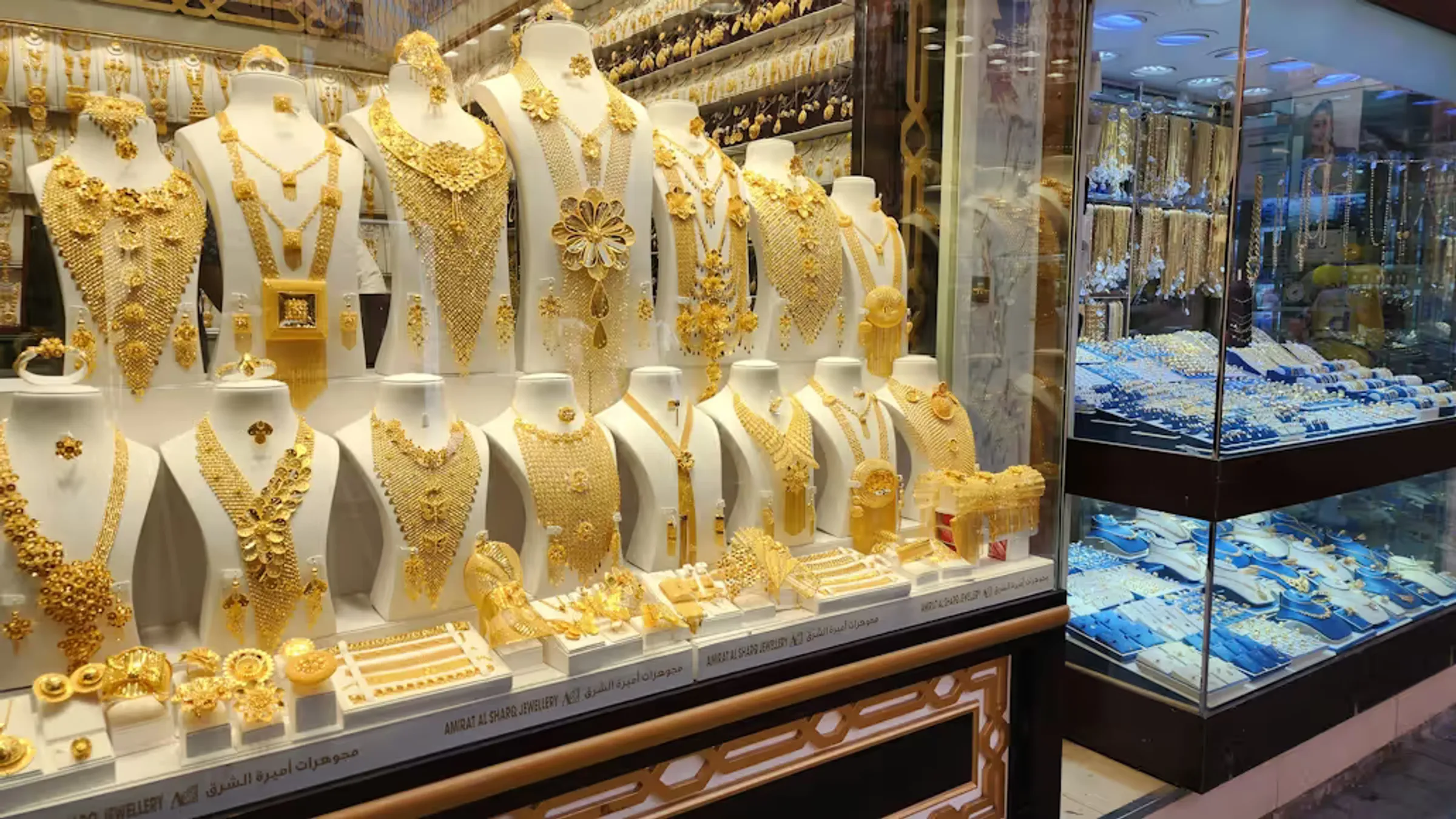
Away from malls and high-rises, Dubai’s souks offer a more traditional retail format built around trade, negotiation, and specialised goods.
You’ll find gold, spices, perfumes, and textiles across different markets, each focused on a specific category. These souks are broadly divided into two groups: the older markets around Dubai Creek (Deira and Bur Dubai), and newer, heritage-style souks designed for a more relaxed retail and dining experience.
Here’s how to navigate them clearly.
Moving in between the Souks
The traditional wooden abra is the most direct way to move between the older souks in Deira and Bur Dubai.
It runs across Dubai Creek between Bur Dubai Abra Station and Deira Old Souk Abra Station, takes a few minutes, and costs AED 1 per ride.
This route drops you within walking distance of the Gold, Spice, and Perfume Souks, making it the most efficient way to connect the main traditional markets.
The Deira souks: Gold, spice, & perfume
This is the main traditional market cluster in Dubai. All three souks are within walking distance of each other, and together they give a complete view of how specialised trading works here.
Dubai Gold Souk
This is one of the largest gold markets globally, with over 300 retailers concentrated in a single area.
Shops sell 18K, 21K, 22K, and 24K gold, along with diamonds and other precious stones. Pricing is standardised based on daily gold rates (displayed publicly), and you pay per gram plus a making charge. Only the making charge is negotiable.
You’ll also find the Najmat Taiba, the world’s heaviest gold ring (over 60 kg), on display.
Location: Al Ras, Deira.
Timings: Sat–Thu 10 AM–10 PM | Fri from 4 PM.
Tip: Negotiate the making charge, not the gold price.
Dubai Spice Souk
A short walk from the Gold Souk, this is where the experience shifts from visual to sensory.
You’ll walk through narrow lanes lined with open sacks of saffron, cardamom, dried lemons, teas, and herbs. The smell hits first, then the colour. Vendors will often offer samples, explain uses, and quote prices you’re expected to negotiate.
This is a good place to buy smaller, packable items like spices, herbal teas, and dried fruits.
Location: Near Baniyas Street, Deira.
Timings: Around 10 AM–10 PM (many shops close midday 1–4 PM).
Tip: Ask for vacuum packing if you’re travelling.
Perfume Souk
Walk a little further and you’ll notice the air change again. This time it’s oud, attar oils, and incense.
This stretch is more specialised. Shops focus on traditional Arabic perfumery, and many offer custom blends. You can describe what kind of fragrance you like ranging from woody, floral, to strong, subtle and they’ll create something for you on the spot.
It’s also one of the few places where you can buy small quantities of high-quality perfume oils at reasonable prices.
Location: Sikkat Al Khail Street, Deira.
Timings: Around 10 AM–10 PM.
Tip: Take your time testing as the scents evolve over minutes.
Bur Dubai souk: Textiles
After covering Deira, cross the Creek to Bur Dubai to continue with a different category.
Textile Souk
This market is focused entirely on fabrics and tailoring.
Shops stock silk, cotton, brocade, lace, and embroidered materials sourced from multiple regions. Many vendors offer on-site tailoring, allowing you to select fabric and place custom stitching orders.
This is more process-driven than quick shopping. Expect to spend time selecting materials and discussing designs.
Location: Bur Dubai, near Al Fahidi.
Timings: 10 AM–10 PM (Fridays from 4 PM).
Tip: Ask for stitching timelines upfront if you’re short on time.
The modern souks: Madinat Jumeirah & Souk Al Bahar
These are not traditional trading markets. They are purpose-built retail spaces designed to replicate souk-style architecture, but without bargaining or informal pricing.
You’ll find fixed-price stores, curated retail, and a strong focus on dining and views rather than negotiation.
Souk Madinat Jumeirah
Set around canals with views of the Burj Al Arab, this is one of the most visually striking places in Dubai.
You’re not coming here to bargain. Instead, it’s about boutique shopping, art, souvenirs, and waterfront dining. The layout encourages slow walking where you are strolling amidst bridges, shaded corridors, and cafés throughout.
Come in the evening as the lighting and reflections off the water make a big difference.
Location: Al Sufouh.
Timings: 10 AM–11 PM (restaurants open later).
Tip: Combine with dinner for the full experience.
Souk Al Bahar
This one blends traditional architecture with modern retail. You’ll find handicrafts, jewellery, and restaurants. Here, the real draw is the view of the Dubai Fountain and Burj Khalifa.
It works best as an evening plan which would involve walking through the souk, then settling into a restaurant with a fountain view.
Location: Downtown Dubai.
Timings: 10 AM–11 PM (F&B stays open till late).
Tip: Book a fountain-facing table in advance.
You’ll move from fast, crowded lanes where every deal is a conversation, to quieter spaces built for lingering.
Start early, take your time, and don’t rush the process. The more you slow down, the more these places start to make sense.




.webp?auto=format&fm=webp&fit=crop&w=750&h=750&q=auto)
.png?auto=format&fm=webp&fit=crop&w=750&h=750&q=auto)

Table of contents